
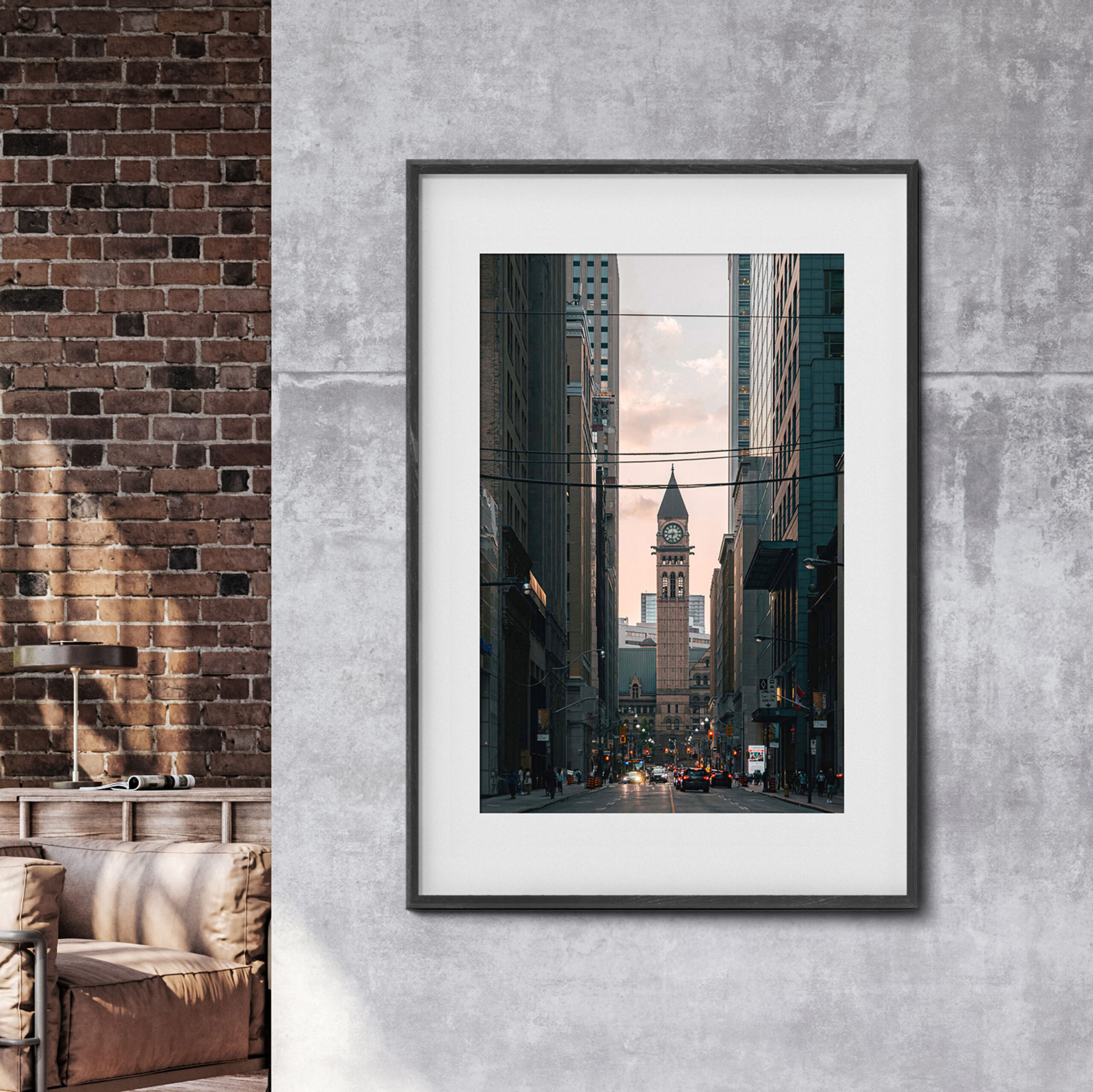
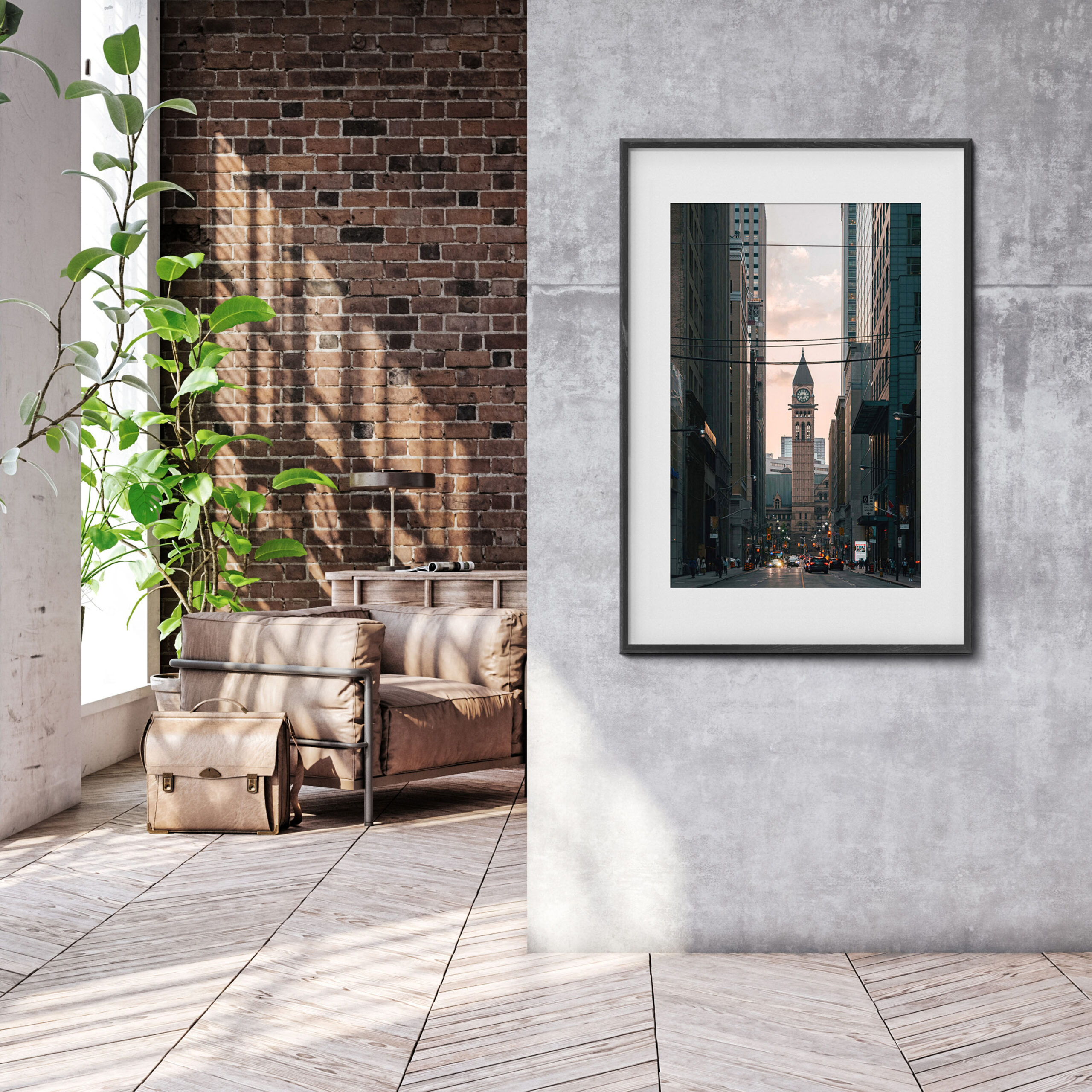

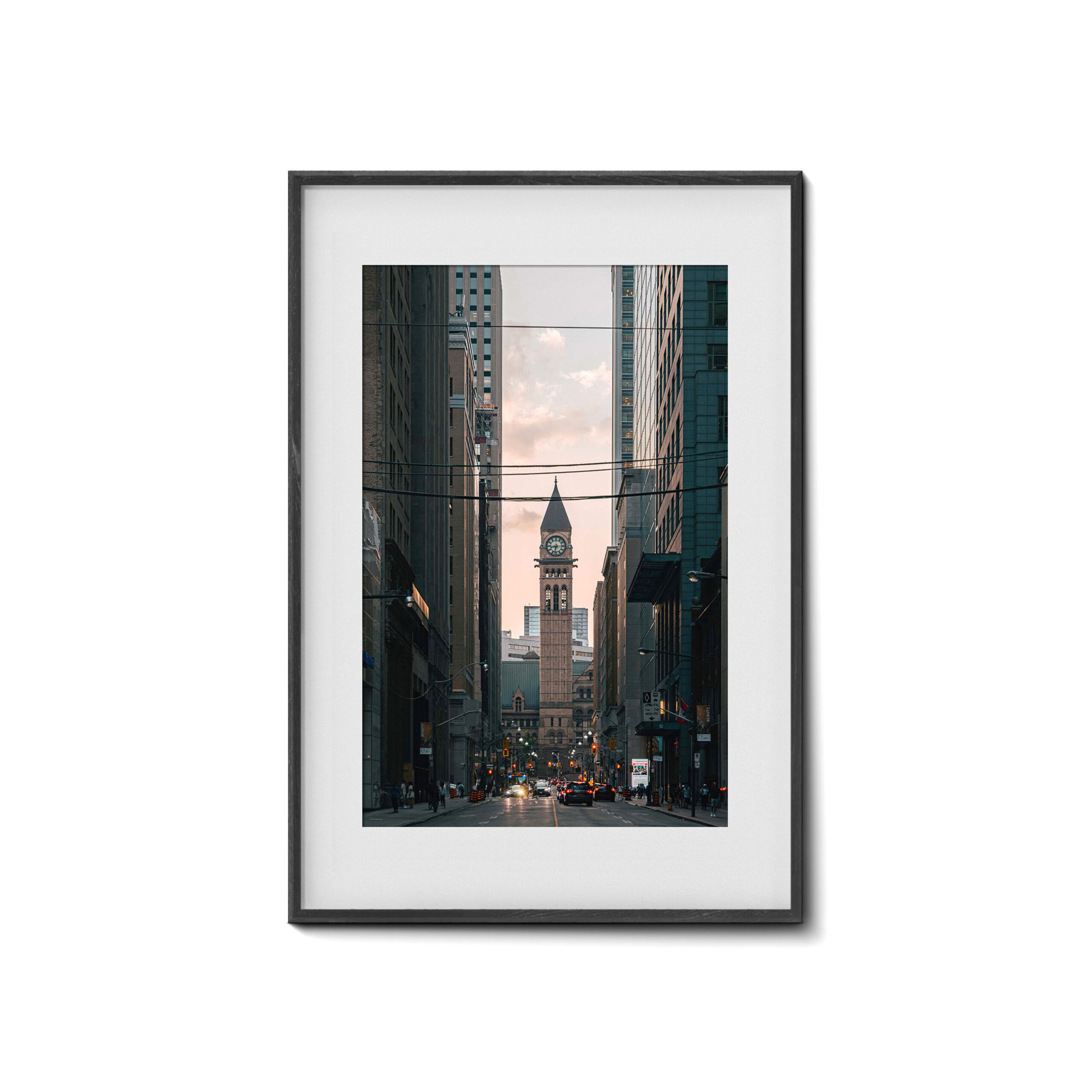
Canada Series #1 Fine Art Print: Toronto Old City Hall (The Courts) 24″w x 36″h – Edition of 10
$1,250.00
This framed fine art print is produced on Ultra Bright Archival Paper.
Size:
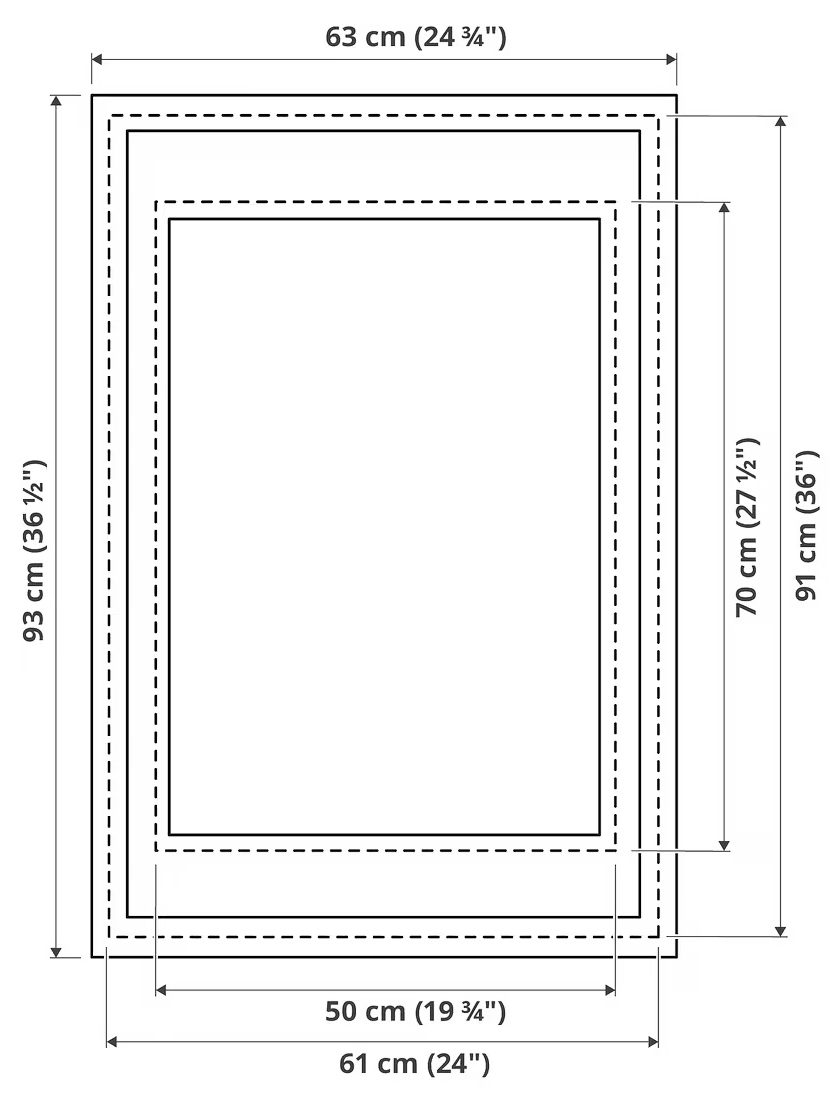
Framed: 24″w x 36″h
Print: 20″w x 27.5″h
Frame materials: Wood/Glass
Toronto Old City Hall (The Courts)
Toronto’s downtown core stands as a living testament to the perpetual dance between preservation and progress, where Victorian architecture shoulders against glass towers in an ever-shifting urban landscape. This photograph, capturing what was once City Hall and now serves as a courthouse, embodies the inevitable transformations that define city life – both architectural and social.
The building’s evolution from a seat of civic leadership to a place of judgment carries a weight of irony that isn’t lost in this composition. What once represented the aspirations and growth of a young city now stands as something more complex: for some, a symbol of justice; for others, a harbinger of consequences. The stone facade remains unchanged, but its meaning has shifted dramatically with its purpose.
This transformation mirrors a pattern I witnessed firsthand during my years in real estate and hospitality – the curious cycle of urban desire and discontent. We sold the dream of downtown living: the energy, the nightlife, the proximity to culture and commerce. Buyers would eagerly embrace the urban lifestyle, investing in luxury condos and lofts, seduced by the promise of sophistication and excitement. Yet, inevitably, as time passed and life stages shifted, these same urban pioneers would begin to resist the very vitality they had originally sought.
The irony wasn’t lost on me then, working for a hospitality company facing noise complaints from residents who had specifically chosen to live in the entertainment district. It’s a peculiar human tendency – we chase change until it catches us, then yearn for the familiar once it does. The same people who celebrated the ‘authentic’ downtown experience would later campaign against new developments, newer nightlife, newer noise – fighting to preserve their version of downtown, forgetting they themselves were once the agents of change others had resisted.
This photograph captures more than just architectural repurposing; it documents the layers of human experience that accumulate in urban spaces. The building’s transformation from City Hall to courthouse serves as a metaphor for how our relationship with the city evolves as we age – what once represented opportunity and progress can shift to represent constraint and consequence.
The composition intentionally plays with perspective, forcing viewers to look up at the structure much as one might when standing before it awaiting judgment. The angle creates a sense of imposing authority, yet the historic architecture reminds us of a time when this same view inspired civic pride rather than trepidation. It’s a visual representation of how meaning is not inherent in our structures but projected upon them by our changing perspectives and circumstances.
In the end, this image speaks to the complexity of urban evolution – how buildings, like people, can maintain their physical form while their purpose and meaning undergo profound transformations. It reminds us that change in our cities is not just about architecture or zoning laws, but about the constant renegotiation of space between generations, between progress and preservation, between what was and what will be.
10 in stock
This framed fine art print is produced on Ultra Bright Archival Paper.
Size:
Framed: 24"w x 36"h
Print: 20"w x 27.5"h
Frame materials: Wood/Glass
Toronto Old City Hall (The Courts)
Toronto's downtown core stands as a living testament to the perpetual dance between preservation and progress, where Victorian architecture shoulders against glass towers in an ever-shifting urban landscape. This photograph, capturing what was once City Hall and now serves as a courthouse, embodies the inevitable transformations that define city life – both architectural and social.
The building's evolution from a seat of civic leadership to a place of judgment carries a weight of irony that isn't lost in this composition. What once represented the aspirations and growth of a young city now stands as something more complex: for some, a symbol of justice; for others, a harbinger of consequences. The stone facade remains unchanged, but its meaning has shifted dramatically with its purpose.
This transformation mirrors a pattern I witnessed firsthand during my years in real estate and hospitality – the curious cycle of urban desire and discontent. We sold the dream of downtown living: the energy, the nightlife, the proximity to culture and commerce. Buyers would eagerly embrace the urban lifestyle, investing in luxury condos and lofts, seduced by the promise of sophistication and excitement. Yet, inevitably, as time passed and life stages shifted, these same urban pioneers would begin to resist the very vitality they had originally sought.
The irony wasn't lost on me then, working for a hospitality company facing noise complaints from residents who had specifically chosen to live in the entertainment district. It's a peculiar human tendency – we chase change until it catches us, then yearn for the familiar once it does. The same people who celebrated the 'authentic' downtown experience would later campaign against new developments, newer nightlife, newer noise – fighting to preserve their version of downtown, forgetting they themselves were once the agents of change others had resisted.
This photograph captures more than just architectural repurposing; it documents the layers of human experience that accumulate in urban spaces. The building's transformation from City Hall to courthouse serves as a metaphor for how our relationship with the city evolves as we age – what once represented opportunity and progress can shift to represent constraint and consequence.
The composition intentionally plays with perspective, forcing viewers to look up at the structure much as one might when standing before it awaiting judgment. The angle creates a sense of imposing authority, yet the historic architecture reminds us of a time when this same view inspired civic pride rather than trepidation. It's a visual representation of how meaning is not inherent in our structures but projected upon them by our changing perspectives and circumstances.
In the end, this image speaks to the complexity of urban evolution – how buildings, like people, can maintain their physical form while their purpose and meaning undergo profound transformations. It reminds us that change in our cities is not just about architecture or zoning laws, but about the constant renegotiation of space between generations, between progress and preservation, between what was and what will be.
Canada Series #1
Canada Series #1 started as one of those classic road trip stories - you know the ones, where someone grabs their camera and heads out looking for beautiful landscapes. But let's be real for a second: life has a funny way of changing your plans.
I set out to capture remote Canadian vistas, and yeah, I got those - there's this one sunset shot of a prairie grain elevator that still gets me every time. But somewhere between Toronto and Vancouver, something shifted. Maybe it was the isolation of the road, or maybe it was just being away from everything familiar, but I started seeing things differently.
The people I encountered along the way became as compelling as the landscapes I was chasing. Sometimes I talked to them, sometimes I didn't. Sometimes I just watched life unfold through my viewfinder. A person rushing through a busy street started feeling just as powerful as those vast empty spaces I'd originally set out to photograph.
The truth is, this series evolved into something way more interesting than what I planned. It became about how we all exist in these spaces - from city streets to remote wilderness. It's about finding those quiet moments that tell bigger stories, capturing both classic Canada and how we're evolving. Kind of like how we're all constantly revealing new layers of ourselves, if you think about it.
Each piece in this limited edition series is meticulously produced on ultra-bright archival paper (because if you're going to document moments like these, you better do it right), and personally signed. But more than that, each image is a window into a moment that might have otherwise slipped by unnoticed.
Finding beauty in unexpected places isn't exactly a new concept, but maybe that's not the point. Maybe it's about taking the time to really see what's around us - the landscapes, the architecture, the people, all of it connected in ways we don't always notice. Ladies and gentlemen, we're floating in space, as Jason Pierce would say, but we're all floating together.
This is Canada as I found it - raw, real, and full of stories waiting to be told. Sometimes the best discoveries happen when you're looking for something else entirely.